Published by White Glove Restoration | San Diego County Water Damage & Mold Remediation | CSLB #1091026
On July 30, 2026, the CDC published the most detailed picture yet of invasive mold disease in the United States. It’s already generating alarming headlines, and we’ve had customers ask us whether the mold in their bathroom is going to kill them.
So let’s do something unusual for a restoration company blog: let’s tell you what the study actually found, what it doesn’t say, and who genuinely needs to act on it.
What the study found
CDC researchers, working with the Georgia Emerging Infections Program, tracked lab results at four Atlanta hospitals from 2020 through 2024. They reviewed 968 patients with a positive mold culture or Aspergillus antigen test, and confirmed 449 cases of invasive mold disease — infections where mold actually invades and damages body tissue.
The headline numbers:
- 45% all-cause mortality within 90 days of diagnosis
- 68% of infections were pulmonary (the lungs), followed by skin and deep tissue, sinuses, and the central nervous system
- 71% of cases involved Aspergillus — most commonly Aspergillus fumigatus
- 43% of patients had been in intensive care in the two weeks before diagnosis; 50% required mechanical ventilation
Invasive mold disease isn’t a reportable condition in the U.S., which is why this study matters: it’s one of the first real attempts to measure how common it actually is. Nationally, the CDC estimates these infections are tied to more than 15,000 hospitalizations and over $1.3 billion in direct medical costs annually.
What the study does not say
This is the part the headlines are skipping.
The study did not determine where any patient was exposed. The researchers were explicit about this. Exposure could have occurred in a hospital, in a healthcare product or device, or anywhere in the general environment. The study wasn’t designed to tell those apart. Nobody in that dataset was traced back to a mouldy wall in their house.
The patient population was not the general public. Among the 449 confirmed cases:
- 59% were taking immunosuppressive medication
- 27% had received a solid organ transplant
- 22% had a blood cancer
- 18% had end-stage renal disease
- 6% had suffered a severe burn in the previous 90 days
The 45% figure is all-cause mortality, meaning every death from any cause within 90 days. In a population this critically ill, that number reflects the severity of the underlying illness as much as the infection.
If you have a healthy immune system, mold in your home is very unlikely to cause an invasive infection. It can absolutely cause other problems — allergic reactions, asthma flares, sinus irritation, sustained structural damage to your property — but that’s a different conversation from this study.
The finding that does matter for buildings
Here’s what should get your attention: the dominant pathogen was
Aspergillus.
Aspergillus isn’t exotic. It’s one of the most common environmental molds on earth, and it is routinely found colonizing water-damaged building materials — wet drywall, saturated insulation, damp subfloor, and HVAC systems with standing condensate. It’s the same genus we identify in San Diego homes after pipe breaks, roof leaks, and slab leaks.
The study also noted a second finding worth sitting with: 35% of patients had none of the classic host risk factors clinicians screen for. The researchers’ conclusion was that surveillance based only on textbook risk profiles will miss a substantial share of cases. Translated for homeowners: the list of people who are vulnerable is broader than most people assume.
So who actually needs to treat water damage as a medical issue?
If anyone in your household is in one of these categories, mold in the building is not a cosmetic problem — it’s a health-relevant one, and it should be handled with proper containment:
- Organ transplant recipients
- People undergoing chemotherapy or with a blood cancer
- Anyone on long-term corticosteroids or other immunosuppressive drugs
- Dialysis and end-stage renal disease patients
- People recovering from a severe burn
- Anyone recently discharged from an ICU or recovering from a serious respiratory illness
On that last point, the study found that patients with a current or recent COVID-19 diagnosis had markedly worse outcomes — 66% ICU admission versus 39%, and 66% 90-day mortality versus 41%. These were people who were acutely or recently ill, not people who had a mild case two years ago.
The same logic applies to facilities: assisted living, memory care, post-transplant housing, dialysis centers, and medical offices. If you manage one of these properties, water intrusion is an infection-control event, not a maintenance ticket.
Why the first 48 hours decide everything
This part doesn’t come from the CDC study — it comes from EPA guidance and the IICRC S500/S520 standards that govern our industry:
Mold can begin growing on wet building materials within 24 to 48 hours.
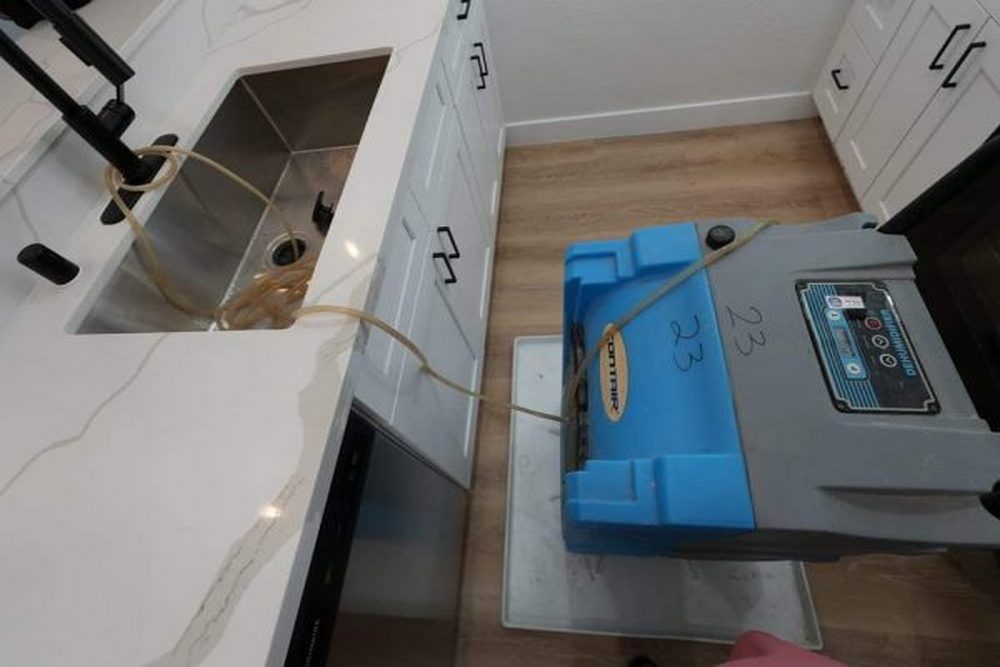
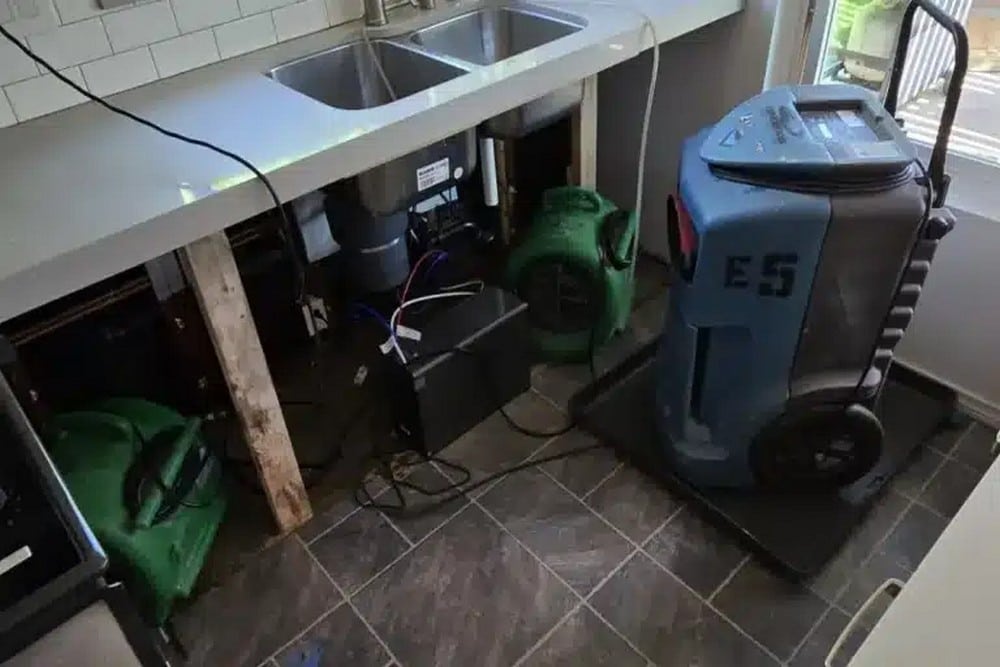
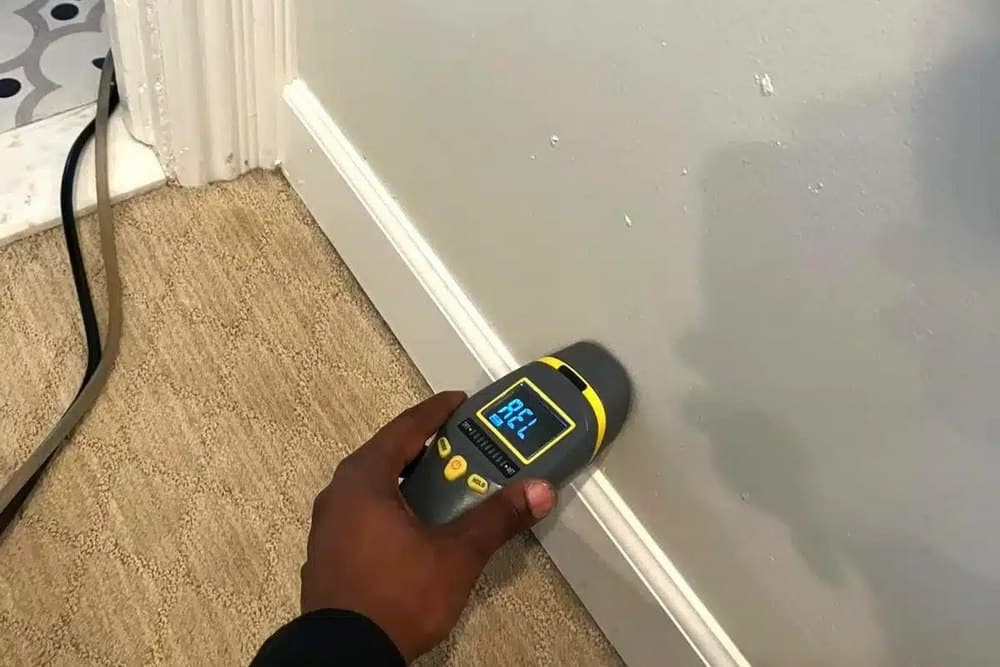
That’s the window. Water extracted and materials dried inside it, and in most cases you never have a mold problem at all. Miss it — a leak behind a vanity, a slow slab leak, a wall cavity that felt dry on the surface — and you’re no longer drying a building. You’re remediating one.
This is also why “I mopped it up and ran a box fan” so often fails. Surface dry is not structurally dry. Moisture migrates into wall cavities, under flooring, and into insulation, where it stays for weeks.
What professional remediation actually does differently
The single most important difference isn’t the cleaning products. It’s
containment.
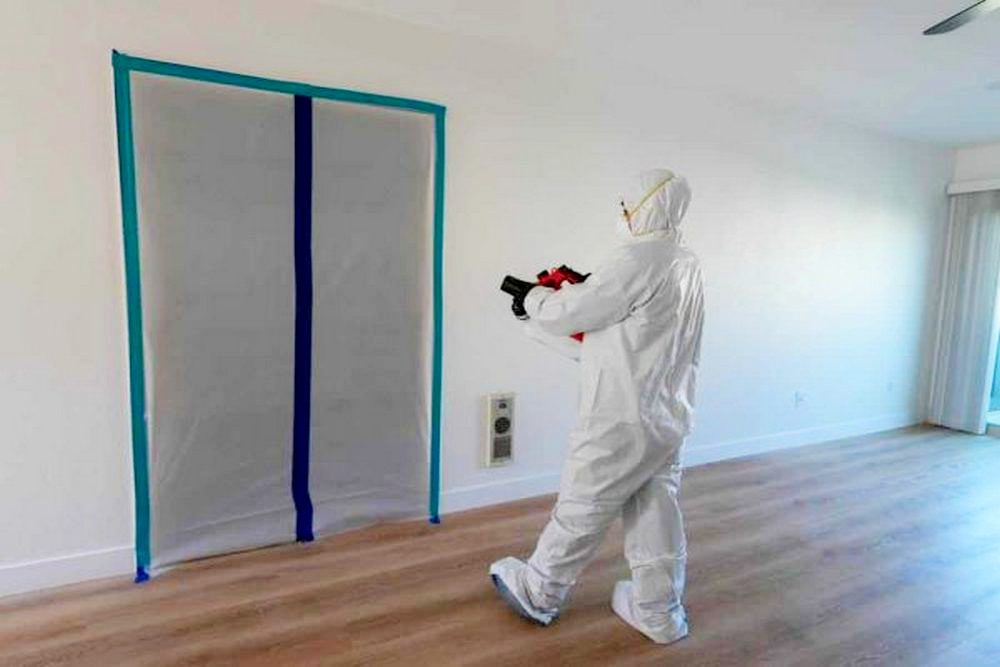
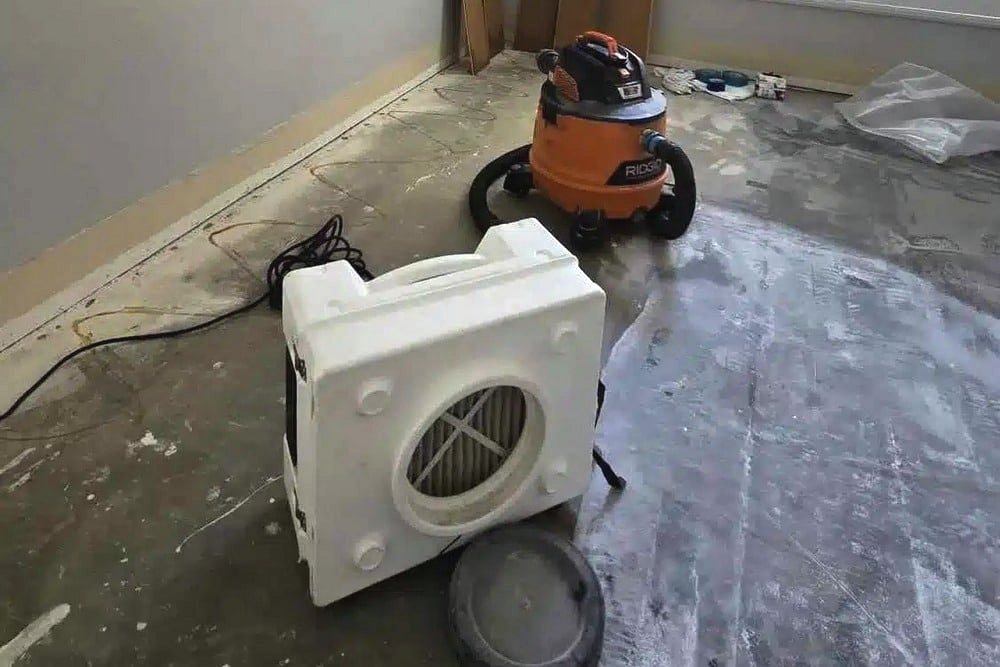
When you disturb a mold colony — cutting drywall, pulling carpet, opening a wall — you aerosolize spores. Done without containment, you take a localized problem and distribute it through the entire house and into the HVAC system. This is the most common way a small remediation becomes a whole-home one.
Proper remediation means:
- Negative air pressure and physical containment so spores can’t migrate to clean areas
- HEPA filtration and air scrubbing during and after removal
- Moisture mapping with meters and thermal imaging to find water you can’t see
- Source correction — the leak, the grading, the condensate line — because remediation without it just resets the clock
- Post-remediation verification by an independent third party, so you have documentation, not just an assurance
That last item matters more than people realize. Independent clearance testing is what protects you at resale, in an insurance claim, and — if the occupant is a transplant patient or a tenant — in a dispute.
The climate factor
CDC investigators raised one more point worth noting. Mold exposure spikes after hurricanes, floods, and other water-driven disasters, and researchers expect the frequency of fungal infections to rise as those events become more common. An aging, increasingly immunocompromised population compounds it.
San Diego isn’t hurricane country, but we get the same mechanism in a different package: atmospheric river events, aging supply lines and cast iron laterals, slab leaks, and a housing stock where a lot of moisture problems stay hidden behind stucco.
The practical takeaway
If you’re a healthy household: don’t panic about this study. Do fix water problems promptly, and do take drying seriously — for your property’s sake as much as your health.
If someone in your household is immunocompromised: treat water intrusion as urgent. Get the affected area contained and professionally dried, and don’t do the demolition yourself.
If you manage a healthcare-adjacent or senior property: you should have a written water-intrusion response protocol with a 24-hour activation trigger. If you don’t, that’s the actionable item from this research.
Talk to White Glove Restoration
We handle water damage restoration, mold remediation, and full reconstruction across San Diego County. We work to IICRC standards, we use containment on every mold job, and we recommend independent third-party clearance testing rather than certifying our own work.
If you’ve had water intrusion — this week or three months ago — a proper moisture assessment will tell you whether you have a drying job or a remediation job. That’s a much better position than guessing.
White Glove Restoration LLC 8221 Arjons Dr., Suite C, San Diego, CA 92126 CSLB #1091026 | Licensed, bonded, and insured 24/7 emergency response across San Diego County
Sources
- Active Surveillance for Invasive Mold Disease — Four Hospitals, Atlanta, Georgia, 2020–2024. MMWR Surveillance Summaries, Vol. 75, No. 5, July 30, 2026. Available at https://www.cdc.gov/mmwr/volumes/75/ss/ss7505a1.htm
- Ynet Health coverage of the CDC study, including researcher commentary on climate-driven disasters and fungal infection risk. Available at https://www.ynet.co.il/health/article/rkyrchjbze
- S. EPA, Mold Remediation in Schools and Commercial Buildings
— guidance on the 24–48 hour drying window.
- IICRC S500 (Water Damage Restoration) and S520 (Mold Remediation) standards.
This article is general information about building science and property restoration. It is not medical advice. If you have health concerns related to mold exposure, talk to your physician.